Discovery and Isolation: BPC-157's Origins in Gastric Juice Research
With over three decades of published preclinical literature, BPC-157 has one of the longest documented research histories of any synthetic peptide compound.
The history of BPC-157 research begins with investigations into the composition of human gastric juice conducted primarily by Professor Predrag Sikiric and colleagues at the University of Zagreb, Croatia. During the early 1990s, this research group was investigating proteins and peptides present in gastric juice that might possess cytoprotective properties, building on earlier research documenting the role of gastric mucosal defense mechanisms.
BPC-157 (Body Protection Compound-157) was identified as a partial sequence derived from a larger protein found in human gastric juice. The synthetic pentadecapeptide, consisting of 15 amino acids (Gly-Glu-Pro-Pro-Pro-Gly-Lys-Pro-Ala-Asp-Asp-Ala-Gly-Leu-Val), was produced through solid-phase peptide synthesis for use in laboratory investigations.
Notably, BPC-157 is stable in human gastric juice, a property that distinguished it from many other bioactive peptides that are rapidly degraded by gastric proteolytic enzymes.
The initial publications from the Zagreb group documented observations from preclinical models examining the compound's interactions with gastric mucosal integrity. Studies published in the early to mid-1990s reported that BPC-157 administration was associated with cytoprotective effects in various gastric lesion models, including those induced by ethanol, NSAIDs, and surgical procedures. These early findings established BPC-157 as a subject of scientific interest and initiated what would become an extensive body of preclinical literature.
The Peptide Research Database catalogs the growing body of published research on BPC-157 and other peptide compounds, providing researchers with a centralized resource for navigating the scientific literature.
The Gastric Protection Era: 1993-2000
The first decade of published BPC-157 research focused primarily on gastrointestinal models. Between 1993 and 2000, the Zagreb research group and collaborators published a series of studies documenting BPC-157's effects in various preclinical gastrointestinal models, establishing a foundation of observations that would inform subsequent research directions.
Published studies during this period examined BPC-157 in models of gastric ulcers, intestinal lesions, and gastrointestinal anastomosis healing. Research documented observations of accelerated mucosal healing, maintained gastric barrier function, and modulated inflammatory responses in treated groups. Several studies investigated BPC-157's interactions with the prostaglandin system, documenting observations suggesting that the compound's cytoprotective effects operated through mechanisms distinct from prostaglandin-dependent pathways.
A notable finding during this period was the documentation of BPC-157's stability in acidic environments. Unlike many peptides that are rapidly degraded at low pH, BPC-157 maintained its structural integrity in gastric juice, a property attributed to its amino acid composition, which lacks aromatic residues susceptible to peptic cleavage. This stability was considered significant because it suggested the possibility of oral administration in research protocols, an unusual route for peptide compounds.
By the late 1990s, the published literature on BPC-157 had expanded to include observations beyond the gastrointestinal tract. Early studies examining the compound in models of musculoskeletal injury and liver damage began to emerge, signaling a broadening of research interest. These preliminary observations in non-gastrointestinal models would set the stage for the diversification of BPC-157 research in the following decade.
Expanding Research Models: 2001-2012
The second decade of BPC-157 research was characterized by a significant expansion of the tissue types and injury models examined. Published studies during this period documented BPC-157 investigations in musculoskeletal, hepatic, cardiovascular, and neurological preclinical models, substantially broadening the compound's documented research profile.
Musculoskeletal research during this period included studies examining BPC-157 in models of tendon, ligament, muscle, and bone injury. Published observations documented accelerated tissue healing in treated groups across multiple injury types, including transected tendons, crushed muscles, and segmental bone defects. Histological analyses reported enhanced granulation tissue formation, increased collagen deposition, and improved tissue organization in BPC-157-treated groups compared to controls.
Hepatological research examined BPC-157 in various liver injury models, including those induced by hepatotoxic agents, surgical procedures, and ischemia-reperfusion protocols. Studies documented observations of modulated inflammatory responses and maintained hepatic function parameters in treated groups. Research also examined BPC-157's interactions with the hepatic NO system, reporting observations of modulated NOS isoform expression.
Neurological research emerged as a new area of BPC-157 investigation during this period. Published studies examined the compound in models of peripheral nerve injury, traumatic brain injury, and neurotoxicity. Observations included enhanced nerve fiber regeneration, modulated dopaminergic and serotonergic system activity, and altered expression of growth factors including VEGF and NGF. These neurological studies contributed to the growing recognition of BPC-157 as a compound with research relevance extending well beyond its gastrointestinal origins. For mechanistic context on vascular aspects of tissue repair, see Angiogenesis Signaling.
Mechanistic Investigations: 2013-2020
As the body of descriptive research on BPC-157 accumulated, the research focus shifted increasingly toward mechanistic investigations seeking to understand the molecular pathways through which the peptide exerts its documented effects. Publications during this period incorporated more sophisticated analytical techniques, including gene expression profiling, protein phosphorylation analyses, and pathway inhibitor studies.
A major area of mechanistic investigation involved BPC-157's interactions with the nitric oxide (NO) system. Multiple publications documented that BPC-157 appeared to modulate the NO system in a context-dependent manner, potentially influencing both constitutive NOS isoforms (eNOS, nNOS) and inducible NOS (iNOS). Research proposed that this NO system modulation might underlie several of BPC-157's documented effects on vascular function and tissue protection.
Studies examining BPC-157's effects on growth factor signaling documented interactions with VEGF, EGF, FGF, and their respective receptor systems. The VEGF pathway received particular attention, with multiple studies reporting increased VEGF expression in various tissue models following BPC-157 treatment. These observations contributed to hypotheses linking BPC-157's tissue repair effects to enhanced angiogenesis and vascular remodeling.
Research during this period also investigated BPC-157's interactions with the FAK-paxillin pathway, a signaling axis critical for cell adhesion, migration, and tissue organization. Published studies documented altered phosphorylation states of focal adhesion kinase and its associated proteins in BPC-157-treated cell models, suggesting potential mechanisms through which the peptide might influence cellular behaviors relevant to tissue repair processes. The Recovery Stack provides BPC-157 alongside complementary research compounds for investigators studying these signaling pathways.
Current Research Landscape: 2021-Present
The current phase of BPC-157 research is characterized by continued mechanistic refinement, expansion into new research areas, and increasing international participation in the research program. The published literature now spans more than three decades and includes contributions from research groups across multiple countries, though the University of Zagreb group continues to produce the majority of publications.
Recent publications have explored BPC-157's interactions with gut microbiome signaling, examining how the peptide influences the gut-brain axis in preclinical models. Studies have also investigated BPC-157 in the context of alcohol-related tissue damage models, reporting observations of modulated inflammatory cascades and maintained tissue integrity. The peptide's documented effects on the NO system have been further refined, with studies characterizing its interactions with both the NOS/NO pathway and the hydrogen sulfide (H2S) signaling system.
New research areas that have emerged in recent years include investigations of BPC-157 in models of drug-induced organ damage, post-surgical adhesion formation, and peripheral neuropathy. Each of these areas has generated preliminary observations that expand the compound's documented research profile while raising new mechanistic questions.
It is important to contextualize the BPC-157 literature within the broader landscape of preclinical peptide research. While the body of published observations is substantial, the majority of studies have been conducted by a relatively concentrated group of researchers, and independent replication by external groups, while increasing, remains an ongoing process. Researchers working with BPC-157 should evaluate the published literature with appropriate scientific rigor and consider the compound as a preclinical research tool whose mechanisms of action continue to be investigated and refined.
Future Directions and Open Questions in BPC-157 Research
Despite more than three decades of published research, numerous fundamental questions about BPC-157 remain subjects of active investigation. These open questions span molecular mechanisms, structure-activity relationships, and the translation of preclinical observations to deeper mechanistic understanding.
Perhaps the most significant open question is the identification of BPC-157's molecular target or receptor. Unlike many bioactive peptides with well-characterized receptor interactions, BPC-157's primary binding partner has not been definitively identified. Various hypotheses have been proposed, including direct interactions with growth factor receptors, modulation of NO system components, and effects on intracellular signaling kinases, but a unifying receptor mechanism has not been established.
The identification of a specific BPC-157 receptor would represent a transformative advance in the field, enabling rational predictions about the compound's signaling activities and facilitating the design of mechanistic studies.
Structure-activity relationship (SAR) studies represent another area requiring further investigation. While the full 15-amino-acid sequence of BPC-157 has been used in the majority of published studies, systematic truncation and substitution studies to identify the minimal active sequence and critical residues have been limited. Understanding which portions of the peptide are essential for activity would inform hypotheses about the mechanism of action and receptor binding.
Additional open questions include the compound's pharmacokinetic profile in various administration routes, the dose-response characteristics across different tissue models, and the potential for synergistic or antagonistic interactions with other signaling peptides. As analytical tools and experimental methodologies continue to advance, these questions are expected to drive the next phase of BPC-157 research and contribute to a more complete understanding of this extensively studied pentadecapeptide.
Continue Exploring the Science
Compound Research Kits
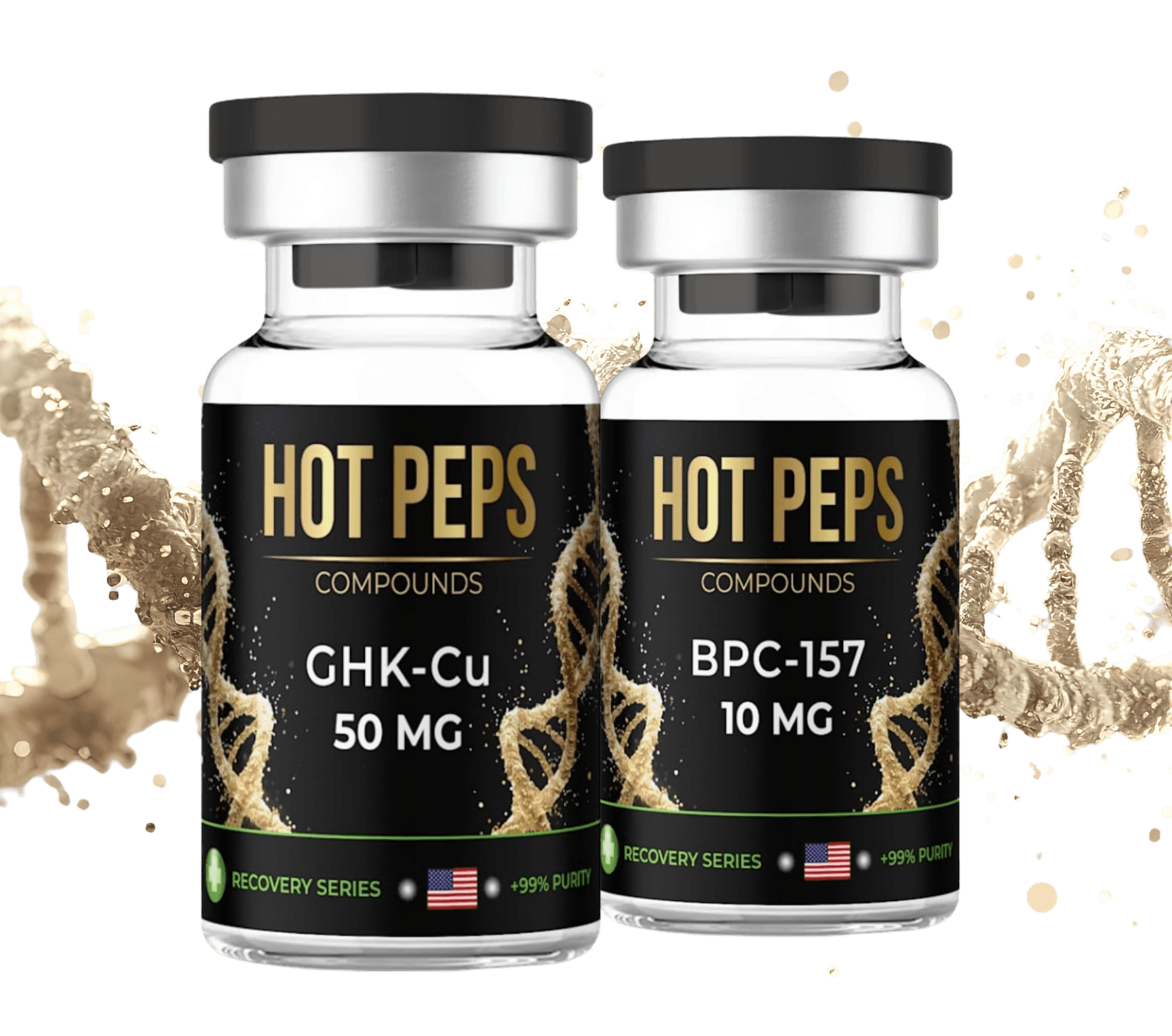

All information presented in this article references published research literature and is intended for educational purposes only. Research peptides are sold strictly for laboratory research use and are not approved for human consumption or medical treatment.