Fundamentals of Angiogenesis: How New Blood Vessels Form
The formation of new blood vessels from existing vasculature is one of the most fundamental processes in tissue biology — and one of the most actively studied areas in peptide research.
Angiogenesis is the physiological process through which new blood vessels form from pre-existing vasculature. Distinct from vasculogenesis, which describes the de novo formation of blood vessels from endothelial progenitor cells during embryonic development, angiogenesis occurs through the sprouting, branching, and remodeling of established vascular networks. This process has been documented as essential for tissue growth, wound repair, and the maintenance of adequate perfusion in metabolically active tissues.
The angiogenic process involves a coordinated series of cellular events. Endothelial cells, which line the interior surface of blood vessels, must first be activated by pro-angiogenic signals. Upon activation, these cells degrade the surrounding basement membrane through the secretion of matrix metalloproteinases (MMPs), migrate toward the angiogenic stimulus, proliferate to form new vessel sprouts, and ultimately organize into functional tubular structures with patent lumens.
The balance between pro-angiogenic and anti-angiogenic factors determines whether angiogenesis proceeds or remains quiescent. This balance, sometimes referred to as the angiogenic switch, is tightly regulated under normal physiological conditions. Research has documented numerous molecular mediators on both sides of this balance, including vascular endothelial growth factor (VEGF), fibroblast growth factors (FGFs), angiopoietins, and thrombospondins. For a broader perspective on how peptides interact with these signaling pathways, the Peptide Mechanisms Explained guide provides additional context on receptor-ligand dynamics relevant to tissue research.
The VEGF Signaling Cascade
Of the many pro-angiogenic factors that regulate new vessel formation, one pathway has emerged as the most extensively studied and the most relevant to peptide research.
Vascular endothelial growth factor (VEGF) is widely recognized as the most potent and specific pro-angiogenic factor identified to date. The VEGF family includes several members, with VEGF-A being the most extensively studied in the context of angiogenesis research. VEGF-A signals primarily through two receptor tyrosine kinases: VEGFR-1 (Flt-1) and VEGFR-2 (KDR/Flk-1), with VEGFR-2 considered the principal mediator of angiogenic signaling in endothelial cells.
Upon VEGF-A binding, VEGFR-2 undergoes dimerization and autophosphorylation at multiple tyrosine residues within its intracellular domain. These phosphorylated residues serve as docking sites for downstream signaling molecules, initiating several parallel cascades. The phospholipase C gamma (PLCgamma) pathway leads to protein kinase C activation and endothelial cell proliferation. The PI3K/Akt pathway promotes cell survival and migration. The Ras/MAPK/ERK pathway contributes to gene expression changes supporting angiogenic phenotypes.
Research has documented that VEGF expression is regulated by multiple transcriptional mechanisms, with hypoxia-inducible factor 1-alpha (HIF-1alpha) serving as a primary transcriptional activator under low-oxygen conditions. This oxygen-sensing mechanism ensures that VEGF production increases when tissues are insufficiently perfused, creating a feedback loop that drives compensatory vessel formation.
Preclinical studies examining peptide compounds in angiogenesis models have documented interactions with components of the VEGF signaling axis. Research on BPC-157 has reported observations of increased VEGF expression in several tissue models, suggesting that this pentadecapeptide may interact with upstream regulators of the VEGF transcriptional program.
Nitric Oxide Pathways in Vascular Signaling
Nitric oxide (NO) is a gaseous signaling molecule produced by nitric oxide synthase (NOS) enzymes through the conversion of L-arginine to L-citrulline. Three isoforms of NOS have been characterized: neuronal NOS (nNOS/NOS1), inducible NOS (iNOS/NOS2), and endothelial NOS (eNOS/NOS3). In the context of angiogenesis, eNOS-derived NO has been documented as a critical downstream mediator of VEGF signaling in endothelial cells.
VEGF-stimulated activation of eNOS occurs through the PI3K/Akt pathway, which phosphorylates eNOS at serine 1177, increasing its enzymatic activity. The resulting NO production contributes to multiple aspects of the angiogenic response, including vasodilation of existing vessels, increased vascular permeability, endothelial cell migration, and the inhibition of platelet aggregation and leukocyte adhesion at sites of new vessel formation.
NO signals primarily through the activation of soluble guanylate cyclase (sGC), which catalyzes the conversion of GTP to cyclic GMP (cGMP). Elevated cGMP levels activate protein kinase G (PKG), leading to smooth muscle relaxation and various endothelial cell responses that support angiogenic processes. This NO/sGC/cGMP axis has been extensively characterized in vascular biology research.
Published studies on BPC-157 have documented observations related to NO system modulation. Research has reported that BPC-157 administration in preclinical models appeared to influence the expression and activity of NOS isoforms, though the precise molecular mechanisms underlying these observations remain subjects of ongoing investigation. These findings have contributed to interest in BPC-157 as a research tool for studying vascular signaling pathways, particularly within the context of the Recovery Stack.
BPC-157 in Angiogenesis Research Models
BPC-157, a synthetic pentadecapeptide derived from a partial sequence of human gastric juice protein body protection compound, has been examined in numerous preclinical studies investigating tissue repair and angiogenesis. The published literature on BPC-157 spans multiple tissue types and experimental models, with several studies specifically documenting observations related to blood vessel formation.
In preclinical wound models, research groups have documented that BPC-157 administration was associated with increased granulation tissue formation and enhanced density of newly formed blood vessels compared to control conditions. Immunohistochemical analyses in these studies reported elevated expression of VEGF and its receptors in tissue samples from BPC-157-treated groups, suggesting potential interactions with the VEGF signaling axis.
Additional published research has examined BPC-157 in models involving compromised vascular supply. Studies using various surgical and chemical injury models have documented observations of accelerated revascularization in BPC-157-treated groups. Some researchers have proposed that these effects may involve modulation of the NO system, based on observed changes in eNOS and iNOS expression patterns, though definitive mechanistic conclusions await further investigation.
It is important to note that the documented research on BPC-157 and angiogenesis has been conducted in preclinical models, including cell culture systems and animal studies. The observations reported in the literature provide valuable information about BPC-157's signaling interactions but should be interpreted within the appropriate research context. For a deeper exploration of how copper-peptide compounds intersect with related tissue remodeling pathways, see Copper Peptides and Collagen Signaling.
GHK-Cu and Vascular Tissue Remodeling
GHK-Cu (glycyl-L-histidyl-L-lysine copper complex) is a naturally occurring tripeptide-copper chelate that has been documented in the scientific literature as a modulator of extracellular matrix remodeling processes. First isolated from human plasma in the 1970s by Loren Pickart, GHK-Cu has since been examined in research contexts spanning matrix metalloproteinase regulation, growth factor expression, and tissue remodeling.
In the context of angiogenesis research, published studies have documented that GHK-Cu exhibits pro-angiogenic properties in several experimental systems. In vitro studies using endothelial cell models have reported that GHK-Cu treatment was associated with increased endothelial cell migration and tubule formation, both of which are key steps in the angiogenic process. Gene expression analyses have documented upregulation of VEGF and FGF-2 in GHK-Cu-treated cell populations.
GHK-Cu's documented effects on matrix metalloproteinases are particularly relevant to angiogenesis research. MMPs play essential roles in degrading the basement membrane and extracellular matrix components that must be remodeled during new vessel formation. Published studies have observed that GHK-Cu influences the expression of multiple MMPs and their endogenous inhibitors (TIMPs), potentially contributing to the matrix remodeling environment necessary for angiogenic sprouting.
The convergence of BPC-157 and GHK-Cu research in angiogenesis models has informed the design of multi-compound research protocols. While each peptide has been documented to interact with distinct but overlapping aspects of the angiogenic signaling network, both have been observed to promote endothelial cell behaviors associated with new vessel formation. This mechanistic overlap provides a rationale for investigating these compounds in complementary research contexts.
Extracellular Matrix Dynamics in Vessel Formation
The signaling pathways and peptide interactions described in the preceding sections all take place within a physical context — the extracellular matrix that surrounds and supports growing blood vessels.
The extracellular matrix (ECM) serves as both a structural scaffold and a signaling platform during angiogenesis. Composed of collagens, laminins, fibronectin, proteoglycans, and numerous other glycoproteins, the ECM provides physical support for growing vessel sprouts while also storing and presenting growth factors that regulate endothelial cell behavior. The dynamic remodeling of ECM components is a prerequisite for each phase of the angiogenic process.
During the initiation of angiogenic sprouting, matrix metalloproteinases and other proteolytic enzymes degrade specific ECM components, creating physical space for endothelial cell migration and liberating matrix-bound growth factors such as VEGF and FGF-2. This proteolytic remodeling must be precisely regulated, as excessive degradation can destabilize existing vessels while insufficient degradation impedes new vessel formation.
As nascent vessel sprouts extend and form lumens, endothelial cells deposit new basement membrane components, including type IV collagen, laminins, and nidogens. This de novo matrix assembly is essential for vessel stabilization and maturation. Pericyte recruitment and association with the newly formed basement membrane provide additional structural support, transitioning the fragile sprout into a functional, perfused vessel.
Research has documented that both BPC-157 and GHK-Cu interact with ECM dynamics through distinct mechanisms. BPC-157 has been observed to influence the expression of growth factors that are stored within the ECM, while GHK-Cu has been documented to modulate the MMP/TIMP balance that governs matrix turnover. These complementary activities have been noted in the literature as potentially relevant to understanding how peptide compounds may influence the complex process of tissue vascularization in research settings.
Related Compounds
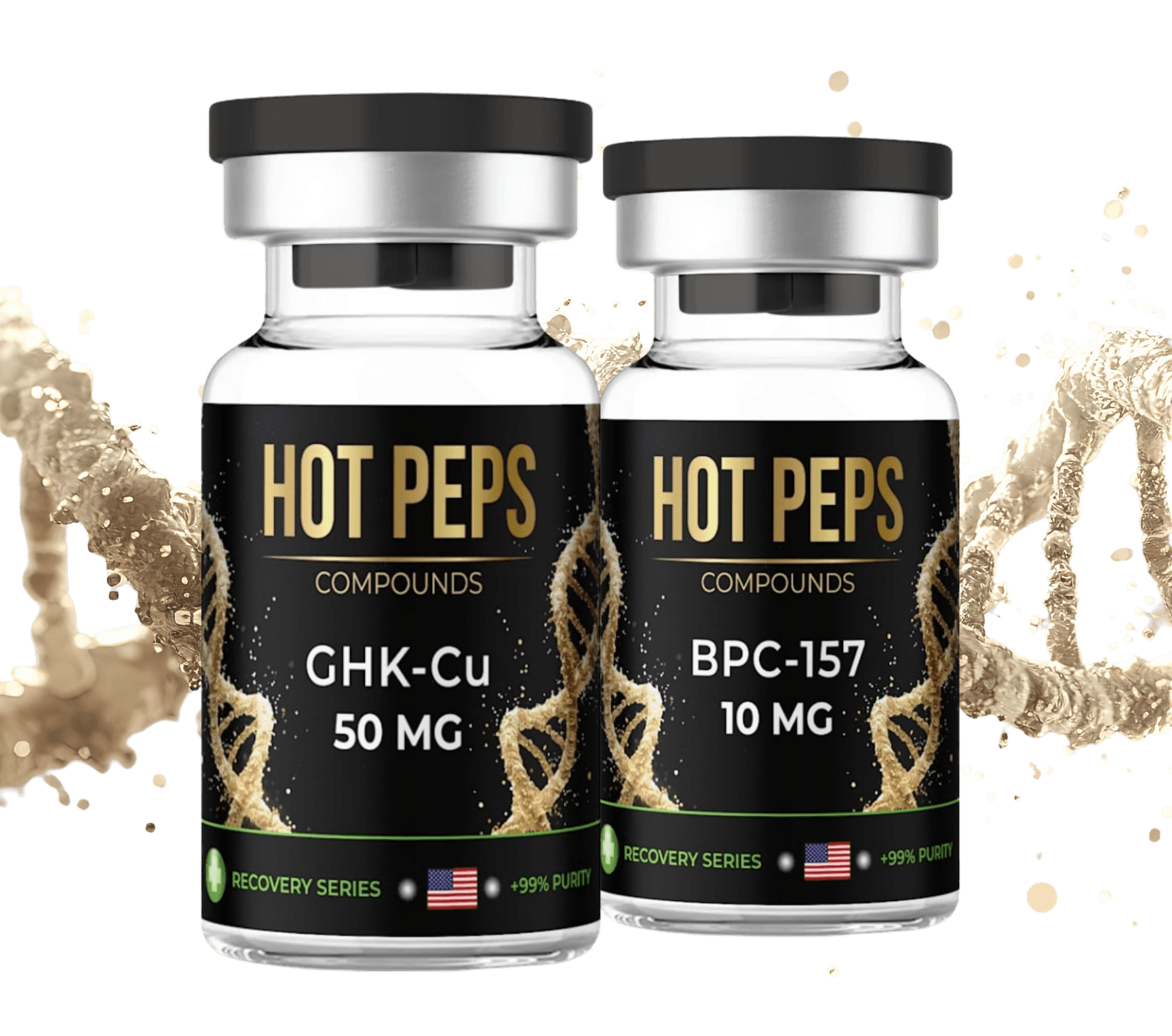
BPC-157 — 10mg
Body Protection Compound-157 (BPC-157) is a synthetic pentadecapeptide derived from a partial sequence of body protection compound discovered in human gastric juice.
View Compound →RecoveryGHK-Cu — 50mg
GHK-Cu is a naturally occurring tripeptide-copper complex first isolated from human plasma in 1973.
View Compound →Continue Exploring the Science
Compound Research Kits

All information presented in this article references published research literature and is intended for educational purposes only. Research peptides are sold strictly for laboratory research use and are not approved for human consumption or medical treatment.