Listen to the Research Brief
An audio overview of the key concepts covered in this guide.
Key Peptide Research Categories
Peptide Signaling Flow
What Peptides Are
Peptides are short chains of amino acids — typically between two and fifty — linked together by peptide bonds. Chains longer than about fifty amino acids are generally called proteins. The distinction matters because peptides' smaller size gives them different biological behavior: they tend to act as signaling molecules rather than structural components.
What a peptide does is determined by its amino acid sequence. The order of amino acids dictates how the molecule folds in three dimensions, which in turn determines which receptors it can bind and which pathways it can activate. Each of the twenty standard amino acids brings different chemical properties — hydrophobic, charged, polar — that shape the peptide's binding characteristics.
The human body naturally produces many peptides that carry signals between cells: neuropeptides in the brain, peptide hormones in the endocrine system, antimicrobial peptides in the immune system, and mitochondrial-derived signaling molecules inside cells. The range of biological processes these molecules participate in is what makes synthetic versions of them valuable research tools.
Synthetic research peptides are manufactured through solid-phase peptide synthesis (SPPS) and supplied in lyophilized form at purities exceeding 98%, verified by HPLC and mass spectrometry. This chemical consistency enables controlled, reproducible experiments. For a deeper look at how these compounds interact with biological systems, see our guide on Peptide Mechanisms Explained.
Receptor Binding
Signal Cascade
Cellular Response
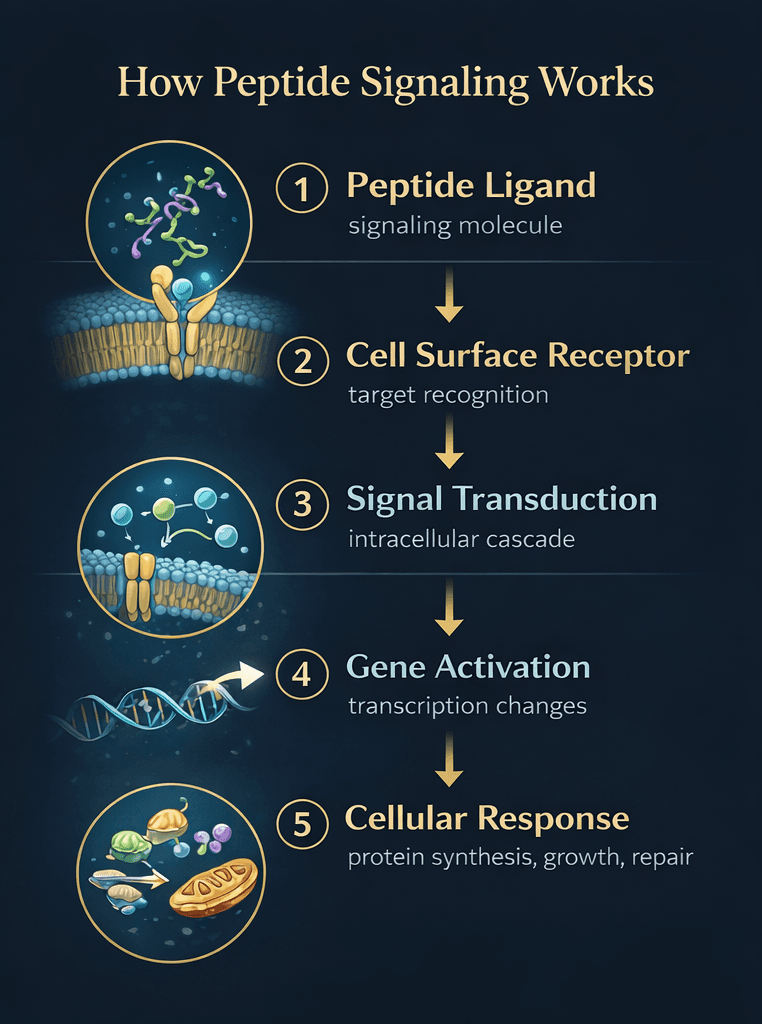
Simplified overview of peptide signaling from receptor binding to cellular response.
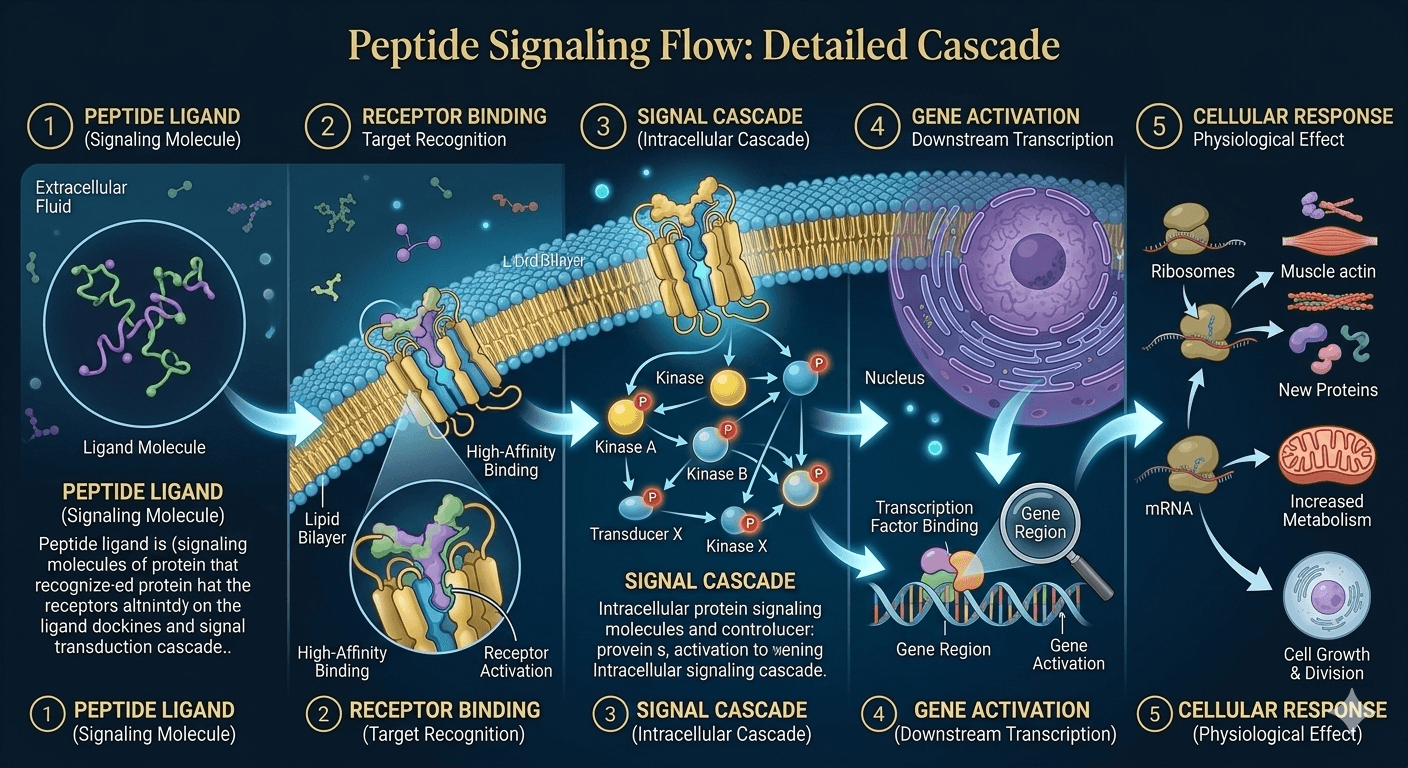
Detailed view of intracellular signaling cascades activated after peptide receptor binding.
Examples of Signaling Peptides
BPC-157
Studied for tissue repair signaling — VEGF, nitric oxide, and growth factor coordination.
Semax
Studied for BDNF modulation and neurotrophic factor pathways supporting neuronal growth.
Selank
Studied for GABA-A receptor modulation and the intersection of immune and neural signaling.
MOTS-C
A mitochondrial-derived peptide studied for AMPK activation and cellular energy sensing.
Peptide Signaling Pathways Explained
Peptides work by binding to specific receptors on the surface of cells. When a peptide connects with its target receptor, the receptor changes shape and triggers a chain of events inside the cell — a process called signal transduction. This is how an extracellular chemical signal gets translated into a specific cellular response.
The specificity of these interactions comes down to shape and charge: a peptide's three-dimensional structure must complement the receptor's binding pocket. Researchers have found that even changing a single amino acid in a peptide sequence can dramatically shift which receptors it binds and how strongly — a principle used to design synthetic analogs with different signaling profiles.
The major receptor families that peptides target include G protein-coupled receptors (GPCRs), the largest receptor family in humans, and receptor tyrosine kinases, which control gene expression and cell growth through phosphorylation cascades. Most research peptides interact with one or both of these families.
Once a peptide binds its receptor, the signal cascades through pathways like MAPK/ERK, PI3K/Akt, and cAMP-dependent signaling. Each pathway controls different aspects of cell behavior — growth, repair, metabolism, and adaptation. Understanding how peptides like BPC-157, Semax, and MOTS-C activate these cascades is central to peptide research. Our Peptide Mechanisms Explained guide covers these pathways in detail.
Related Research
Peptides Studied in Tissue Repair Research
Recovery peptides are among the most actively studied research compounds. Two in particular — BPC-157 and GHK-Cu — have built deep preclinical research profiles around tissue signaling, blood vessel formation, and extracellular matrix remodeling.
BPC-157: Tissue Signaling and Angiogenesis
What It Is: BPC-157 is a synthetic 15-amino-acid peptide derived from a protective protein found in human gastric juice. It is one of the most frequently cited compounds in tissue repair research.
What Researchers Found: In preclinical studies, BPC-157 increased levels of VEGF — the growth factor that drives new blood vessel formation (angiogenesis). It also interacted with the nitric oxide system and influenced PDGF and FGF, two growth factors involved in cell migration and tissue rebuilding. Unlike most peptides that work through a single receptor, BPC-157 appeared to coordinate multiple signaling pathways at once.
Why Scientists Study It: BPC-157 is unusual because it acts as a broad signaling coordinator rather than a single-target compound. This makes it valuable for studying how the body orchestrates complex tissue repair — from blood vessel growth to matrix rebuilding — at the molecular level.
Key Signaling Pathways:
- VEGF upregulation and angiogenesis
- Nitric oxide (NO) system modulation
- PDGF and FGF growth factor signaling
- Fibroblast migration and collagen expression
Research Snapshot:
- Promoted endothelial cell tube formation in vitro
- Increased VEGF expression in multiple tissue models
- Influenced multiple repair pathways simultaneously
- One of the most-cited peptides in tissue signaling literature
Explore the Research: BPC-157 Research Profile | BPC-157 Product Page | Research Hub
GHK-Cu: Collagen Signaling and Matrix Biology
What It Is: GHK-Cu is a naturally occurring tripeptide (glycyl-L-histidyl-L-lysine) that binds copper(II) ions. First isolated from human plasma in 1973, its levels naturally decline with age — a finding that launched decades of matrix biology research.
What Researchers Found: GHK-Cu influenced genes involved in collagen production (types I and III), glycosaminoglycan synthesis, and the balance between matrix-building and matrix-degrading enzymes. The copper ion plays an active role — it serves as a cofactor for enzymes like lysyl oxidase that cross-link collagen fibers. Gene profiling studies identified over 4,000 human genes influenced by GHK.
Why Scientists Study It: GHK-Cu sits at the intersection of tissue repair signaling, gene expression regulation, and trace metal biology. Few compounds offer this kind of multi-level influence over the extracellular matrix.
Key Signaling Pathways:
- Collagen synthesis (types I and III)
- MMP/TIMP balance and matrix remodeling
- Lysyl oxidase activation via copper cofactor
- Decorin expression and TGF-beta signaling
Research Snapshot:
- Modulated over 4,000 genes in profiling studies
- Influenced collagen cross-linking through copper-dependent enzymes
- Shifted the balance between matrix building and degradation
- Levels decline with age, driving research into age-related matrix changes
Explore the Research: GHK-Cu Research Profile | GHK-Cu Product Page | Recovery Stack
Neuropeptide Research
Neuropeptides are signaling molecules that influence neurotransmitter release, synaptic plasticity, and the expression of growth factors that support neuronal health. Two synthetic neuropeptides — Semax and Selank — have built extensive preclinical research profiles.
Semax: Neurotrophic Factor Research
What It Is: Semax is a synthetic 7-amino-acid peptide based on a fragment of adrenocorticotropic hormone (ACTH 4-10), with an added Pro-Gly-Pro tail that makes it resistant to enzymatic breakdown.
What Researchers Found: In animal models, Semax increased BDNF (brain-derived neurotrophic factor) levels in the hippocampus and cortex — two brain regions central to learning and memory. Research also showed interactions with nerve growth factor (NGF), glial cell line-derived neurotrophic factor (GDNF), and the dopamine and serotonin systems. For deeper mechanistic context, see our guide on neuropeptide signaling.
Why Scientists Study It: Semax offers a way to investigate how a single, well-characterized peptide can modulate the brain's neurotrophic factor network — the system responsible for neuronal survival, growth, and synaptic adaptation.
Key Signaling Pathways:
- BDNF expression via TrkB receptor activation
- NGF and GDNF modulation
- Dopamine and serotonin system interactions
- MAPK/ERK and PI3K/Akt downstream cascades
Research Snapshot:
- Increased BDNF mRNA and protein in hippocampus and cortex
- Interacted with multiple neurotrophic factor pathways
- Enzymatically stable due to Pro-Gly-Pro tail design
- One of the most studied neuropeptides in preclinical literature
Explore the Research: Semax Research Profile | Semax Product Page
Selank: GABAergic and Enkephalin Research
What It Is: Selank is a synthetic analog of tuftsin — a naturally occurring immune-modulating peptide — extended with a Gly-Pro sequence for enzymatic stability.
What Researchers Found: Selank altered the composition of GABA-A receptor subunits in specific brain regions, potentially shifting inhibitory tone across neural circuits. It also influenced enkephalin metabolism — enkephalins are the brain's natural pain- and mood-regulating peptides. Additional studies showed effects on serotonin and norepinephrine balance.
Why Scientists Study It: Selank sits at a rare intersection: immune signaling, inhibitory neurotransmission, and endogenous opioid regulation. Few compounds touch all three systems, making it valuable for studying how these networks interact.
Key Signaling Pathways:
- GABA-A receptor subunit modulation
- Enkephalinase activity and endogenous opioid regulation
- Serotonin and norepinephrine balance
- Immune-neural signaling cross-talk
Research Snapshot:
- Shifted GABA-A receptor composition in targeted brain regions
- Modulated enkephalin levels through enzyme regulation
- Influenced both inhibitory and monoamine neurotransmitter systems
- Derived from an immune peptide, bridging immunity and neuroscience
Explore the Research: Selank Research Profile | Selank Product Page | Neuro Stack
Mitochondrial Peptides in Cellular Energy Signaling
Metabolic peptide research is one of the fastest-growing areas in the field. It spans two distinct approaches: mitochondrial-derived peptides that reveal how organelles communicate with the rest of the cell, and multi-receptor agonists that target interconnected energy regulation systems.
MOTS-C: Mitochondrial Energy Signaling
What It Is: MOTS-C is a 16-amino-acid peptide encoded in the mitochondrial genome — not nuclear DNA. This makes it part of a recently discovered class called mitochondrial-derived peptides (MDPs), which changed how researchers think about mitochondria: not just as energy factories, but as active signaling organelles.
What Researchers Found: MOTS-C activated AMPK, the cell's master energy sensor. AMPK activation drove glucose uptake, fatty acid oxidation, and mitochondrial biogenesis. Studies also linked MOTS-C to the methionine-folate cycle, connecting cellular energy metabolism to DNA methylation and redox balance. For more on this pathway, see our guide on mitochondrial peptide signaling.
Why Scientists Study It: MOTS-C represents a fundamentally different kind of peptide signaling — one where mitochondria send instructions back to the rest of the cell. This "retrograde signaling" opens new questions about how energy-producing organelles influence whole-cell behavior.
Key Signaling Pathways:
- AMPK activation (master energy sensor)
- Glucose uptake and fatty acid oxidation
- Mitochondrial biogenesis
- Methionine-folate cycle and one-carbon metabolism
Research Snapshot:
- Encoded in mitochondrial DNA, not nuclear DNA
- Activated the cell's central energy-sensing pathway (AMPK)
- Connected energy metabolism to DNA methylation and redox balance
- Part of a new class of signaling molecules (MDPs) discovered in recent decades
Explore the Research: MOTS-C Research Profile | MOTS-C Product Page | Metabolic Stack
Triple-Receptor Metabolic Signaling Agonists
What It Is: A class of synthetic compounds that activates three metabolic receptors simultaneously: GIP (glucose-dependent insulinotropic polypeptide), GLP-1 (glucagon-like peptide-1), and glucagon. Each receptor controls a different part of the body's energy regulation system.
What Researchers Found: GIP and GLP-1 drove glucose-dependent insulin secretion through cAMP pathways. Glucagon promoted fat oxidation and hepatic glucose output. Preclinical data showed that activating all three pathways at once produced integrated metabolic responses that no single-receptor agonist could replicate.
Why Scientists Study It: The central question is whether simultaneous activation of three interconnected metabolic receptors produces effects that are qualitatively different from targeting them individually. The answer appears to be yes — the combined signal is more than the sum of its parts.
Key Signaling Pathways:
- GIP receptor: glucose-dependent insulin secretion
- GLP-1 receptor: incretin signaling and cAMP pathways
- Glucagon receptor: hepatic glucose output and fat oxidation
- Cross-talk between all three receptor systems
Research Snapshot:
- Targeted three metabolic receptors simultaneously
- Produced integrated responses beyond single-receptor activation
- Addressed interconnected energy regulation pathways
- One of the fastest-growing areas in metabolic peptide research
Explore the Research: Research Hub | Metabolic Stack
Melanocortin Receptor Peptides
The melanocortin system is a signaling network built around five receptor subtypes (MC1R through MC5R) that regulate diverse biological processes. Two synthetic peptides — PT-141 and Melanotan II — are widely used in melanocortin research because they activate these receptors in different ways.
PT-141 (Bremelanotide): Selective MC3R/MC4R Agonist
What It Is: PT-141 is a cyclic 7-amino-acid peptide and a metabolite of Melanotan II. Its defining feature is selectivity — it preferentially activates MC3R and MC4R, two receptor subtypes concentrated in hypothalamic circuits of the central nervous system.
What Researchers Found: PT-141 activated both the classical cAMP pathway (through Gs proteins) and ERK1/2 signaling through beta-arrestin at MC4R. This phenomenon — called biased agonism — means the same receptor triggered different downstream effects depending on which signaling arm was engaged. The cyclic structure gave PT-141 greater metabolic stability and sharper selectivity than linear melanocortin analogs.
Why Scientists Study It: PT-141 lets researchers isolate the effects of selective MC3R/MC4R activation. By comparing its results with broad-spectrum agonists, scientists can map which effects come from specific receptor subtypes versus general melanocortin activation.
Key Signaling Pathways:
- MC3R and MC4R selective agonism
- cAMP generation through Gs protein coupling
- ERK1/2 activation via beta-arrestin (biased agonism)
- Hypothalamic CNS signaling circuits
Research Snapshot:
- Demonstrated biased agonism at MC4R (dual signaling arms)
- Showed sharper receptor selectivity than linear analogs
- Cyclic structure improved metabolic stability
- Key tool for mapping melanocortin receptor subtype functions
Explore the Research: PT-141 Research Profile | PT-141 Product Page
Melanotan II: Broad-Spectrum Melanocortin Research
What It Is: Melanotan II is a synthetic cyclic analog of alpha-MSH that activates multiple melanocortin receptors — MC1R, MC3R, MC4R, and MC5R. This broad profile makes it the opposite of PT-141's selective approach.
What Researchers Found: At MC1R (found on melanocytes), Melanotan II activated the PKA-CREB-MITF signaling cascade that drives melanogenesis research. At MC4R, it engaged the same central nervous system pathways studied with PT-141 but with less receptor selectivity, activating multiple subtypes at once.
Why Scientists Study It: Melanotan II serves as a comparative tool. By studying it alongside the more selective PT-141, researchers can determine which effects come from specific receptor subtypes versus broad melanocortin activation — a key question in receptor pharmacology.
Key Signaling Pathways:
- MC1R: PKA-CREB-MITF melanogenesis cascade
- MC3R and MC4R: central nervous system signaling
- MC5R: additional peripheral signaling
- Broad agonism across multiple receptor subtypes
Research Snapshot:
- Activated four melanocortin receptor subtypes (MC1R, MC3R, MC4R, MC5R)
- Drove the PKA-CREB-MITF cascade at MC1R
- Provided broad-spectrum comparison to PT-141's selectivity
- Widely used as a multi-receptor reference compound
Explore the Research: Melanotan II Research Profile | Melanotan II Product Page | Elite Performance Stack
How Researchers Study Peptides
Peptide research follows a progression from controlled cell experiments to animal models and, in some cases, clinical trials. Understanding these methods provides context for the preclinical literature referenced throughout this guide.
In Vitro Research
In vitro studies — experiments in cell cultures or isolated biological systems — are the starting point. They let researchers examine peptide-receptor binding, signaling cascades, and gene expression changes under tightly controlled conditions. Common techniques include receptor binding assays, Western blotting, quantitative PCR, and fluorescence microscopy.
Preclinical Animal Models
Much of the published data on compounds like BPC-157, Semax, and MOTS-C comes from animal models. These studies reveal systemic effects, pharmacokinetics, and tissue distribution patterns that cell cultures cannot capture. All preclinical work is conducted under institutional review and established ethical guidelines.
Analytical and Quality Standards
Reliable peptide research depends on compound purity. HPLC (high-performance liquid chromatography) quantifies purity, while mass spectrometry confirms molecular identity. Research-grade peptides are supplied at 98%+ purity. Hot Peps maintains third-party HPLC and MS verification for all compounds — learn more about our quality and purity standards.
Emerging Research Tools
Advances in proteomics, cryo-electron microscopy, and computational modeling are expanding the researcher's toolkit — enabling higher-resolution views of peptide-receptor complexes and more precise predictions of structure-activity relationships.
Peptide Research Categories at a Glance
The table below summarizes the four major peptide research categories, their key compounds, and the primary signaling systems under investigation.
Recovery and Tissue Signaling
Compounds: BPC-157, GHK-Cu Primary Pathways: VEGF/angiogenesis, nitric oxide system, collagen synthesis, MMP/TIMP matrix balance Research Focus: How the body coordinates blood vessel formation, cell migration, and extracellular matrix rebuilding at the molecular level
Neuropeptide Research
Compounds: Semax, Selank Primary Pathways: BDNF/TrkB, GABA-A receptor modulation, enkephalin metabolism, monoamine neurotransmitter systems Research Focus: How neurotrophic factors and inhibitory signaling networks support neuronal survival, synaptic plasticity, and circuit adaptation
Metabolic Signaling
Compounds: MOTS-C, triple-receptor agonists Primary Pathways: AMPK activation, GIP/GLP-1/glucagon receptor signaling, mitochondrial biogenesis, methionine-folate cycle Research Focus: How cells sense nutrients, regulate energy production, and coordinate glucose and lipid metabolism
Melanocortin Receptor Research
Compounds: PT-141, Melanotan II Primary Pathways: MC1R-MC5R signaling, cAMP/PKA cascades, beta-arrestin/ERK1/2 (biased agonism), PKA-CREB-MITF Research Focus: How receptor subtype selectivity translates into different downstream effects across a shared receptor family
Key Takeaways
- Peptides are short amino acid chains that interact with specific cellular receptors to trigger intracellular signaling cascades. Their biological activity depends on sequence, structure, and receptor fit.
- Receptor binding drives everything. When a peptide binds its target receptor, the receptor changes shape and activates downstream signaling — MAPK/ERK, PI3K/Akt, cAMP, and other pathways that alter gene expression and cell behavior.
- Recovery peptides (BPC-157, GHK-Cu) are studied for tissue signaling — from angiogenesis and growth factor coordination to collagen synthesis and matrix remodeling.
- Neuropeptides (Semax, Selank) target the brain's growth factor and inhibitory signaling systems — BDNF modulation, GABA-A receptor tuning, and enkephalin metabolism.
- Metabolic peptides (MOTS-C, triple-receptor agonists) address cellular energy sensing — AMPK activation, mitochondrial signaling, and integrated glucose/lipid metabolism through multi-receptor approaches.
- Melanocortin peptides (PT-141, Melanotan II) activate the MC receptor family, with research focused on how selective versus broad receptor activation produces different signaling outcomes.
- Multi-pathway signaling is a defining theme in modern peptide research. Many compounds interact with multiple targets, and curated research kits support coordinated multi-compound investigation.
- Research rigor depends on high-purity compounds (98%+ verified by HPLC and MS), proper controls, and mechanistic analysis rather than observational data alone.
The Expanding Research Landscape
Peptide research has grown substantially over the past two decades. Better synthesis technology, sharper analytical methods, and a deeper understanding of peptide signaling have all contributed. Here are the trends shaping where the field is headed.
Growth in Published Research
PubMed searches for compounds like BPC-157, GHK-Cu, Semax, and MOTS-C show a clear upward trend in published preclinical studies. This growth tracks with two factors: wider availability of high-purity research compounds and growing recognition that peptide signaling is central to cell biology.
Multi-Target Signaling Approaches
The field is shifting from studying one receptor at a time toward multi-target signaling. Triple-receptor agonists are one example; coordinated multi-peptide protocols are another. Curated research kits like the Recovery Stack, Neuro Stack, and Metabolic Stack support this kind of systematic, multi-compound investigation.
Mitochondrial-Derived Peptides
The discovery that mitochondria encode their own bioactive peptides opened an entirely new research category. MOTS-C and related mitochondrial-derived peptides (MDPs) are at the frontier of understanding how mitochondria communicate with the rest of the cell.
From Observation to Mechanism
The field is moving beyond observational findings toward precise mechanistic work. Modern studies use pathway-specific inhibitors, knockout models, and high-throughput screening to pinpoint exactly how peptides influence cell behavior. For compound-specific summaries, visit the Peptide Research Database or explore the Research Hub.
Common Questions About Research Peptides
Below are answers to some of the most common questions researchers ask when beginning to explore peptide science and research compounds.
What are research peptides?
Research peptides are short chains of amino acids — typically between two and fifty residues — that are synthesized through solid-phase peptide synthesis (SPPS) for use in laboratory investigations. They are supplied in lyophilized form at purities of 98% or greater and are used to study receptor binding, signal transduction, and cellular signaling mechanisms in controlled experimental settings. Research peptides are intended for laboratory research use only and are not for human consumption.
How are research peptides synthesized?
Research peptides are manufactured through solid-phase peptide synthesis (SPPS), a method first described by Robert Bruce Merrifield in 1963. The process involves sequentially coupling protected amino acids to a growing chain anchored to a solid resin support. After assembly, the peptide is cleaved from the resin, purified via HPLC, and verified by mass spectrometry. The resulting compound is then lyophilized (freeze-dried) for stable storage and transport.
What categories of research peptides exist?
Research peptides are commonly organized by their primary areas of investigation. Major categories include recovery and tissue signaling peptides (such as BPC-157 and GHK-Cu), neuropeptides (such as Semax and Selank), metabolic signaling peptides (such as MOTS-C and triple-receptor agonists), and melanocortin receptor peptides (such as PT-141 and Melanotan II). Each category corresponds to distinct receptor systems and signaling pathways studied in preclinical research.
How do peptides interact with cellular receptors?
Peptides interact with cellular receptors through complementary molecular recognition — the peptide's three-dimensional structure and charge distribution must match the receptor's binding pocket. Upon binding, the receptor undergoes a conformational change that initiates intracellular signal transduction cascades, including MAPK/ERK, PI3K/Akt, and cAMP-dependent pathways. The specificity of these interactions is determined by the peptide's amino acid sequence and structural conformation.
What purity standards apply to research peptides?
Research-grade peptides are typically supplied at purities of 98% or greater, as verified by high-performance liquid chromatography (HPLC). Molecular identity is confirmed through mass spectrometry (MS). These analytical methods ensure that the compound in each vial matches the intended amino acid sequence and is free from significant synthesis by-products, truncated sequences, or residual reagents.
Continue Exploring the Science






All information presented in this article references published research literature and is intended for educational purposes only. Research peptides are sold strictly for laboratory research use and are not approved for human consumption or medical treatment.