Compound Categories in This Database
Recovery and Tissue Research Compounds
Tissue signaling peptides are among the most studied research compounds, with deep preclinical literature around angiogenesis, matrix remodeling, and growth factor pathways. Both compounds are available individually or as part of the Recovery Stack.
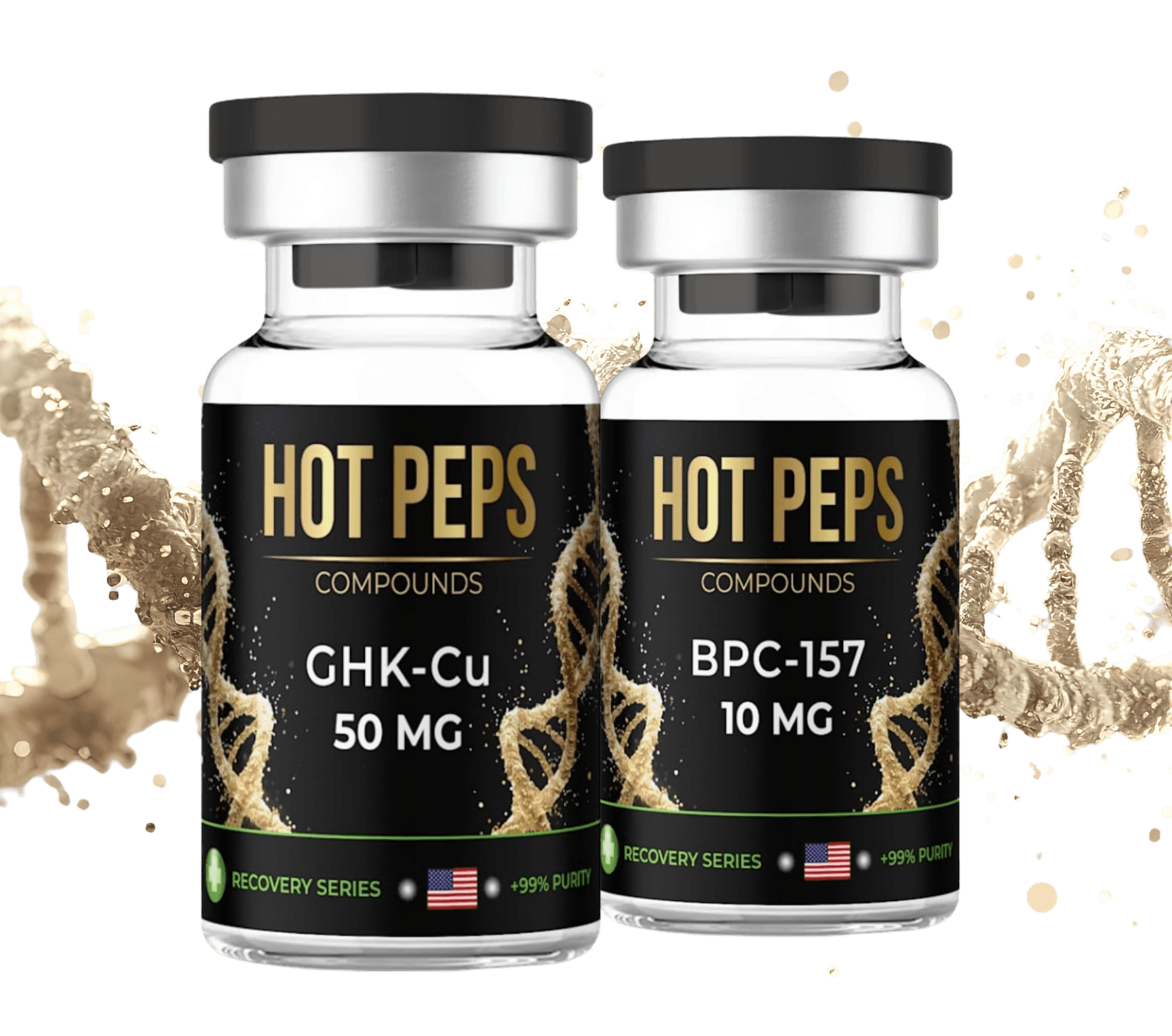
BPC-157 (Body Protection Compound-157)
What It Is: A synthetic 15-amino-acid peptide derived from a protective protein found in human gastric juice. One of the most frequently cited compounds in tissue repair research.
What Researchers Found: BPC-157 upregulated VEGF to promote blood vessel formation, promoted fibroblast migration in cell cultures, and interacted with the nitric oxide system. It modulated multiple signaling pathways simultaneously rather than targeting a single receptor.
Why Scientists Study It: BPC-157's broad signaling profile makes it valuable for studying how tissue repair processes are coordinated — from angiogenesis to matrix rebuilding — at the molecular level.
Key Signaling Pathways:
- VEGF upregulation and angiogenesis
- Nitric oxide (NO) system modulation
- PDGF and FGF growth factor signaling
- Fibroblast migration and collagen expression
Research Snapshot:
- Promoted endothelial cell tube formation in vitro
- Acted across multiple repair pathways simultaneously
- Among the most-cited tissue signaling peptides in preclinical literature
- Broad modulator rather than single-receptor agonist
Explore the Research: BPC-157 Research | BPC-157 Product
GHK-Cu (Glycyl-L-Histidyl-L-Lysine Copper Complex)
What It Is: A naturally occurring tripeptide complexed with copper(II) ion. First isolated from human plasma in 1973, its levels decline with age.
What Researchers Found: GHK-Cu modulated genes involved in collagen production, glycosaminoglycan synthesis, and the balance between matrix-building and matrix-degrading enzymes. The copper ion served as a cofactor for lysyl oxidase and other enzymes that cross-link structural proteins. Gene profiling identified over 4,000 human genes influenced by GHK.
Why Scientists Study It: GHK-Cu connects gene expression, structural protein assembly, and trace metal biology in a single compound — offering a multi-level view of extracellular matrix regulation.
Key Signaling Pathways:
- Collagen synthesis (types I and III)
- MMP/TIMP balance and matrix turnover
- Lysyl oxidase activation via copper cofactor
- Decorin expression and TGF-beta signaling
Research Snapshot:
- Influenced over 4,000 genes in profiling studies
- Copper ion plays an active enzymatic role
- Shifted balance between matrix construction and degradation
- Levels decline with age, driving age-related matrix research
Explore the Research: GHK-Cu Research | GHK-Cu Product
Neuropeptide Research Compounds
Neuropeptides target the brain's growth factor pathways, neurotransmitter systems, and synaptic signaling mechanisms. Both compounds are available individually or as part of the Neuro Stack. For mechanistic context, see the neurotrophic signaling section of our mechanisms guide.
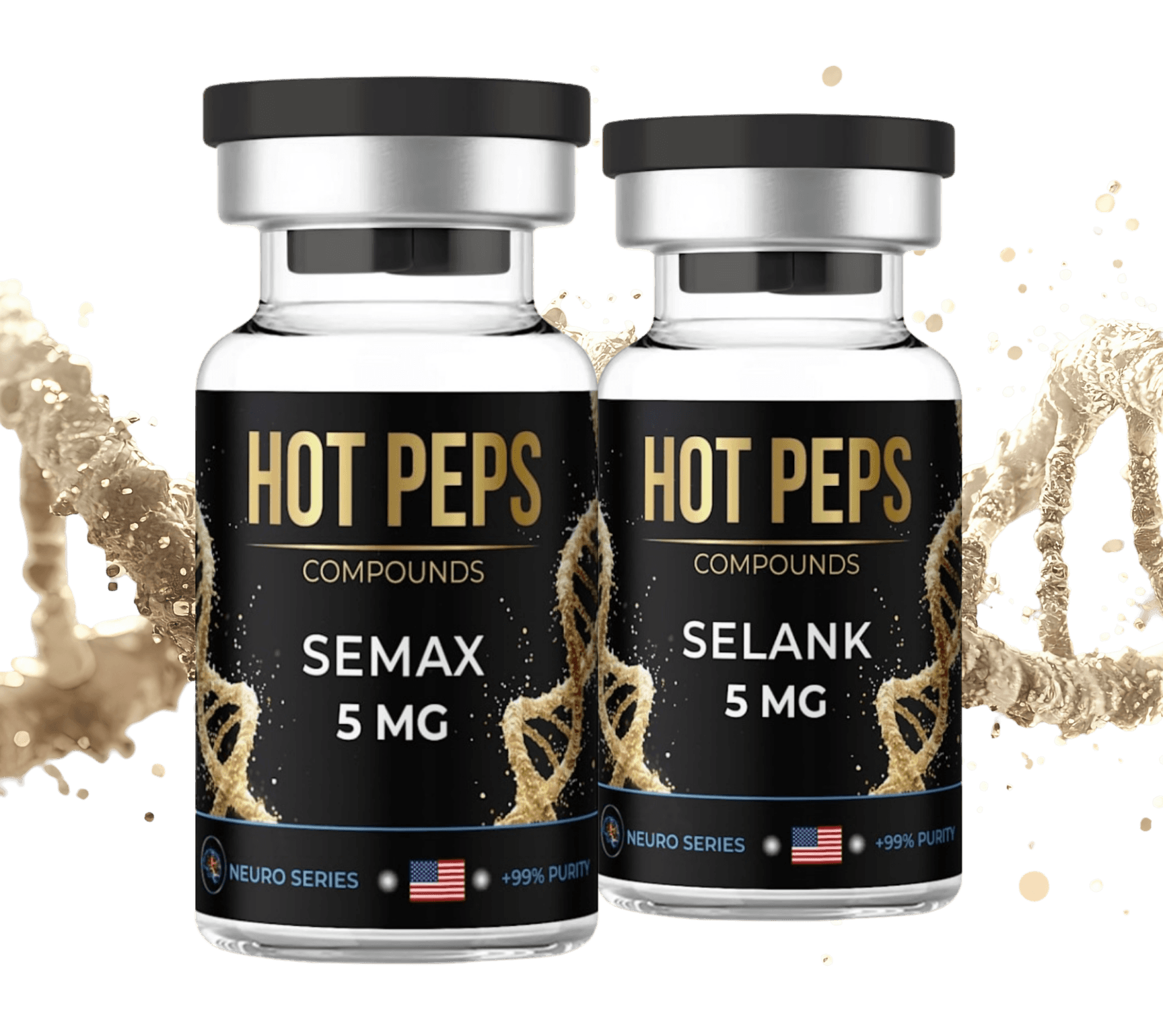
Semax (ACTH 4-10 Analog with Pro-Gly-Pro Extension)
What It Is: A synthetic 7-amino-acid peptide based on an ACTH fragment (4-10), engineered with a Pro-Gly-Pro tail for resistance to enzymatic breakdown.
What Researchers Found: In animal models, Semax increased BDNF mRNA and protein levels in the hippocampus and cortex — regions critical for learning and memory. Research also showed interactions with NGF, GDNF, and the monoamine neurotransmitter systems (dopamine and serotonin).
Why Scientists Study It: Semax offers a controlled way to investigate how a single peptide can modulate the brain's neurotrophic factor network — the system responsible for neuronal survival, growth, and synaptic adaptation.
Key Signaling Pathways:
- BDNF expression via TrkB receptor activation
- NGF and GDNF modulation
- Dopamine and serotonin system interactions
- MAPK/ERK and PI3K/Akt downstream cascades
Research Snapshot:
- Increased BDNF in hippocampus and cortex
- Interacted with multiple neurotrophic factor pathways
- Enzymatically stable design for longer experimental windows
- One of the most studied neuropeptides in preclinical research
Explore the Research: Semax Research | Semax Product
Selank (Tuftsin Analog with Gly-Pro Extension)
What It Is: A synthetic 7-amino-acid peptide derived from tuftsin — an immunomodulatory peptide — extended with a Gly-Pro sequence for enzymatic stability.
What Researchers Found: Selank altered GABA-A receptor subunit composition in specific brain regions, shifting inhibitory tone. It also modulated enkephalinase activity, affecting the brain's endogenous opioid peptide levels. Additional studies showed effects on serotonin and norepinephrine balance.
Why Scientists Study It: Selank sits at the intersection of three signaling systems — inhibitory neurotransmission, endogenous opioid regulation, and immune-neural cross-talk. Few compounds bridge all three, making it valuable for studying their interactions.
Key Signaling Pathways:
- GABA-A receptor subunit modulation
- Enkephalinase activity and endogenous opioid regulation
- Serotonin and norepinephrine balance
- Immune-neural signaling cross-talk
Research Snapshot:
- Shifted GABA-A receptor composition in targeted brain regions
- Modulated enkephalin levels through enzyme regulation
- Bridged inhibitory, opioid, and immune signaling systems
- Derived from an immune peptide, connecting immunity to neuroscience
Explore the Research: Selank Research | Selank Product
Metabolic Signaling Compounds
Metabolic peptides span mitochondrial-derived signaling molecules and multi-receptor agonists that target the body's energy regulation systems. These compounds are available individually or as part of the Metabolic Stack. For detailed mechanistic discussion, see our metabolic signaling analysis.
MOTS-C (Mitochondrial Open Reading Frame of the 12S rRNA Type-C)
What It Is: A 16-amino-acid peptide encoded in the mitochondrial genome's 12S rRNA gene — part of the mitochondrial-derived peptides (MDPs), a recently discovered class where mitochondria send signaling instructions back to the rest of the cell.
What Researchers Found: MOTS-C activated AMPK (the cell's master energy sensor), driving glucose uptake, fat oxidation, and mitochondrial biogenesis. It also connected to the methionine-folate cycle, linking energy metabolism to DNA methylation and redox balance.
Why Scientists Study It: MOTS-C demonstrates that mitochondria are active signaling organelles, not just energy producers. This retrograde signaling paradigm opened new questions about organelle communication and metabolic regulation.
Key Signaling Pathways:
- AMPK activation (master energy sensor)
- Glucose uptake and fatty acid oxidation
- Mitochondrial biogenesis
- Methionine-folate cycle and one-carbon metabolism
Research Snapshot:
- Encoded in mitochondrial DNA, not nuclear DNA
- Activated the central energy-sensing AMPK pathway
- Connected energy metabolism to epigenetic regulation
- Part of a new signaling class discovered in recent decades
Explore the Research: MOTS-C Research | MOTS-C Product
KLOW (Metabolic Research Compound)
What It Is: A metabolic signaling peptide studied for its interactions with cellular energy sensing and nutrient partitioning pathways.
What Researchers Found: KLOW interacted with metabolic pathway modulation, energy homeostasis, and nutrient sensing mechanisms. It is included in metabolic research protocols alongside other energy metabolism compounds.
Why Scientists Study It: KLOW addresses cellular energy sensing mechanisms that complement other metabolic signaling compounds in coordinated research protocols.
Key Signaling Pathways:
- Metabolic pathway modulation
- Energy homeostasis regulation
- Nutrient sensing mechanisms
Research Snapshot:
- Studied alongside other metabolic signaling compounds
- Targets energy sensing and nutrient partitioning
- Included in coordinated metabolic research protocols
Explore the Research: KLOW Product
Triple-Receptor Metabolic Signaling Agonist
What It Is: A synthetic agonist that targets GIP, GLP-1, and glucagon receptors simultaneously. Each receptor controls a different aspect of the body's energy regulation system.
What Researchers Found: GIP and GLP-1 drove glucose-dependent insulin secretion through cAMP pathways. Glucagon promoted hepatic glucose output and fat oxidation. Simultaneous activation produced integrated metabolic responses that differed qualitatively from targeting any single receptor.
Why Scientists Study It: Triple-receptor agonism tests whether combined activation of interconnected metabolic receptors produces effects greater than the sum of their individual contributions — a central question in multi-target pharmacology.
Key Signaling Pathways:
- GIP receptor: glucose-dependent insulin secretion
- GLP-1 receptor: incretin signaling via cAMP
- Glucagon receptor: hepatic glucose output, fat oxidation
- Cross-talk between all three receptor systems
Research Snapshot:
- Targeted three metabolic receptors simultaneously
- Produced integrated responses beyond single-receptor activation
- Addressed interconnected energy regulation pathways
- Active area of multi-target metabolic research
Explore the Research: Retatrutide Research | Retatrutide Product
Melanocortin Research Compounds
Melanocortin peptides activate the MC receptor family (MC1R-MC5R), a signaling network involved in diverse biological processes. Both compounds are available individually or as part of the Elite Performance Stack. For mechanistic detail, see the melanocortin signaling section of our mechanisms guide.
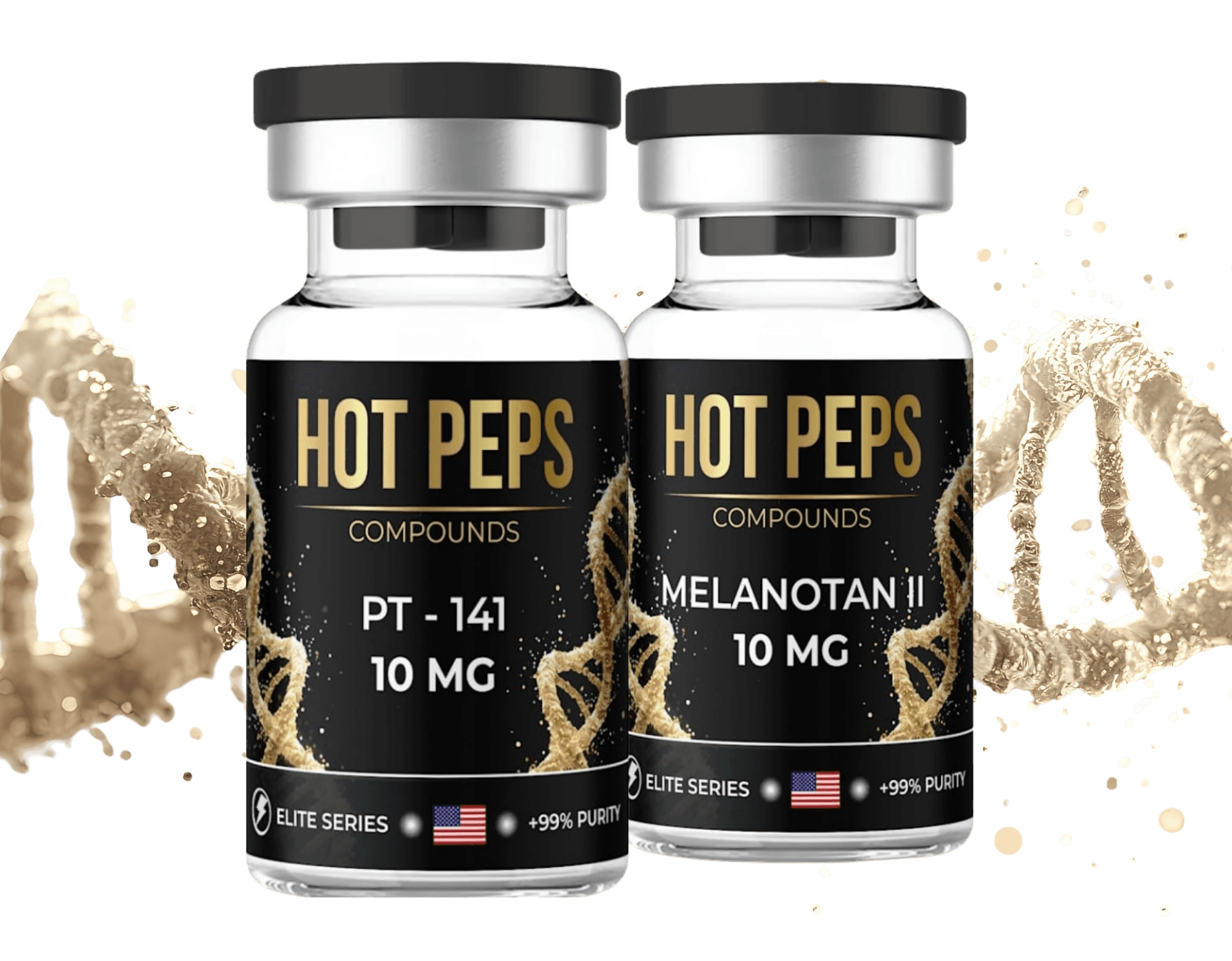
PT-141 (Bremelanotide)
What It Is: A cyclic heptapeptide and metabolite of Melanotan II that selectively activates MC3R and MC4R — receptor subtypes concentrated in central nervous system hypothalamic circuits.
What Researchers Found: PT-141 activated both the classical cAMP pathway (through Gs proteins) and ERK1/2 through beta-arrestin at MC4R. This biased agonism means the same receptor triggered different downstream effects depending on which signaling arm was engaged. The cyclic structure provided sharper selectivity than linear analogs.
Why Scientists Study It: PT-141 isolates the effects of selective MC3R/MC4R activation. Comparing its results with broad-spectrum agonists lets researchers map which effects come from specific receptor subtypes versus general melanocortin stimulation.
Key Signaling Pathways:
- MC3R and MC4R selective agonism
- cAMP generation through Gs protein coupling
- ERK1/2 activation via beta-arrestin (biased agonism)
- Hypothalamic CNS signaling circuits
Research Snapshot:
- Demonstrated biased agonism at MC4R
- Cyclic structure provided sharper selectivity than linear analogs
- Key tool for separating receptor subtype-specific effects
- Preferentially targeted CNS melanocortin circuits
Explore the Research: PT-141 Research | PT-141 Product
Melanotan II
What It Is: A synthetic cyclic analog of alpha-MSH that activates MC1R, MC3R, MC4R, and MC5R. This broad receptor profile makes it the multi-target counterpart to PT-141's selective approach.
What Researchers Found: At MC1R, Melanotan II activated the PKA-CREB-MITF melanogenesis cascade. At MC4R, it engaged the same CNS pathways studied with PT-141 but activated multiple receptor subtypes simultaneously rather than selectively.
Why Scientists Study It: Melanotan II serves as a broad-spectrum reference compound. Studying it alongside selective PT-141 lets researchers determine which effects come from specific receptor subtypes versus general melanocortin activation.
Key Signaling Pathways:
- MC1R: PKA-CREB-MITF melanogenesis cascade
- MC3R and MC4R: central nervous system signaling
- MC5R: additional peripheral signaling
- Broad agonism across multiple receptor subtypes
Research Snapshot:
- Activated four melanocortin receptor subtypes (MC1R, MC3R, MC4R, MC5R)
- Drove the melanogenesis cascade at MC1R
- Provided broad-spectrum comparison to PT-141's selectivity
- Widely used as multi-receptor reference compound
Explore the Research: Melanotan II Research | Melanotan II Product
Understanding Research Categories
The categorization of research peptides by signaling pathway rather than chemical structure reflects the practical organization of preclinical research. Understanding how these categories relate to one another provides context for designing coordinated research protocols.
Category Organization Rationale
Peptides are grouped by their primary areas of investigation — recovery and tissue signaling, neuropeptide research, metabolic signaling, and melanocortin receptor research. This organization mirrors the way published literature is structured and allows researchers to identify compounds relevant to their specific areas of study. However, it is important to note that biological signaling networks exhibit extensive cross-talk, and many research peptides have been documented to interact with pathways that span multiple categories.
Cross-Category Connections
Several documented connections exist between research categories. For example, BPC-157 research has examined both tissue signaling (via VEGF and growth factor pathways) and nitric oxide-mediated mechanisms that intersect with vascular and neural signaling. MOTS-C, categorized under metabolic signaling, has also been examined in the context of cellular stress responses that connect to broader homeostatic signaling networks. These cross-category interactions reflect the complexity of biological systems and underscore the value of multi-compound research approaches.
Research Kits and Coordinated Investigation
The Recovery Stack, Neuro Stack, Metabolic Stack, and Elite Performance Stack are organized to support coordinated research within each signaling category. These curated combinations reflect the published literature on multi-peptide experimental designs and enable researchers to examine potential interactions between related compounds. For a comprehensive introduction to peptide categories and their signaling contexts, see the Complete Guide to Research Peptides.
Citation Standards and Research Methodology
Rigorous peptide research requires adherence to established standards in compound sourcing, experimental methodology, and data reporting. This section outlines the key principles that define quality research practice.
Compound Purity and Verification
All research compounds referenced in this database are supplied at purities of 98% or greater, as verified by high-performance liquid chromatography (HPLC). Molecular identity is confirmed through mass spectrometry (MS), and certificates of analysis are available for each batch. Researchers should verify compound purity and identity before initiating experiments, as synthesis impurities can confound results and compromise data integrity. Learn more about Hot Peps quality and purity standards.
Literature and Citation Practices
The research summaries in this database reference findings from peer-reviewed preclinical literature. When citing peptide research, investigators should reference the original published studies rather than summary resources. Key databases for locating primary research include PubMed (NIH National Library of Medicine), Google Scholar, and discipline-specific journals such as *Peptides*, *Journal of Medicinal Chemistry*, and *Biochemical Pharmacology*.
Experimental Design Considerations
Published best practices for peptide research emphasize the importance of appropriate controls, blinding, randomization, and statistical analysis. In vitro studies should include vehicle controls and, where possible, positive controls using established reference compounds. Preclinical studies should follow institutional ethical guidelines and report methodology with sufficient detail to enable replication.
Data Interpretation
Preclinical findings documented in the research literature represent observations made under specific experimental conditions. Translation of in vitro observations to in vivo contexts, and from animal models to other systems, requires careful consideration of species differences, concentration ranges, administration routes, and duration of exposure. The summaries in this database reflect the published preclinical literature and should be interpreted within the appropriate scientific context. For mechanistic discussion of specific signaling pathways, refer to our Peptide Mechanisms Explained guide.
Common Questions About Research Peptides
Below are answers to some of the most common questions researchers ask when beginning to explore peptide science and research compounds.
What is the Peptide Research Database?
The Peptide Research Database is a structured reference resource that organizes research peptide compounds by their primary areas of investigation. Each entry includes a compound summary, primary research areas, key preclinical observations, and links to detailed research profiles and product pages. The database is designed to help researchers identify compounds relevant to their specific signaling pathway of interest.
How are compounds organized in the database?
Compounds are organized by research category: recovery and tissue signaling (BPC-157, GHK-Cu), neuropeptide research (Semax, Selank), metabolic signaling (MOTS-C, KLOW, triple-receptor agonists), and melanocortin receptor research (PT-141, Melanotan II). This organization mirrors the structure of published preclinical literature and allows researchers to locate compounds relevant to specific signaling pathways.
What purity standards are applied to listed compounds?
All compounds referenced in the database are supplied at purities of 98% or greater, verified by high-performance liquid chromatography (HPLC). Molecular identity is confirmed through mass spectrometry (MS). Certificates of analysis are available for each production batch, ensuring researchers can verify compound quality before initiating experimental protocols.
How should preclinical research findings in the database be interpreted?
Research summaries in the database reflect observations documented in published preclinical literature, including in vitro cell culture studies and in vivo animal model experiments. These findings were generated under specific experimental conditions and should be interpreted within the appropriate scientific context. Translation between experimental systems requires careful consideration of species differences, concentrations, and methodology.
Continue Exploring the Science





All information presented in this article references published research literature and is intended for educational purposes only. Research peptides are sold strictly for laboratory research use and are not approved for human consumption or medical treatment.