The Situation
Peptide research has expanded considerably over the past two decades, generating a growing volume of published literature, conference presentations, and — increasingly — informal observational reports from laboratory researchers and academic discussion groups. Online forums, institutional mailing lists, and professional networks have become venues where researchers share preliminary observations, discuss experimental protocols, and compare notes on compound behavior under various conditions.
This proliferation of informal communication raises important questions about how such reports should be interpreted within the broader scientific framework. Observational accounts from individual laboratories — while sometimes providing interesting starting points for further investigation — are fundamentally different from controlled, peer-reviewed studies. Understanding this distinction is essential for any researcher navigating the peptide literature.
The present discussion examines the role that community-generated observational reports play in peptide research, with particular attention to how they relate to compounds such as BPC-157, neuropeptides like Semax, and copper-binding peptides. The goal is not to validate or dismiss such reports, but to place them in proper scientific context and clarify why controlled experimentation remains the only reliable method for establishing biological relationships.
The Search
Between the pace of active laboratory work and the slower timeline of formal publication, researchers often face an information gap — and community discussions have emerged to fill it.
Researchers entering the peptide field often encounter a patchwork of information sources. Peer-reviewed journals provide the most rigorous data, but publication timelines can lag behind active laboratory work by months or years. In the interim, researchers frequently turn to community discussions to orient themselves within rapidly evolving subfields.
A survey of peptide research forums and academic discussion groups reveals several recurring themes. Discussions about tissue-related peptides — particularly BPC-157, a synthetic pentadecapeptide — are among the most frequent, with researchers describing various experimental configurations and noting outcomes under different conditions. Similarly, neuropeptide research involving compounds such as Semax has generated considerable community interest, with researchers discussing observations related to cellular assays and in vitro protocols.
These community discussions serve a practical function: they help researchers identify which compounds are attracting active investigation, which experimental approaches are being attempted, and which technical challenges others have encountered.
However, it is critical to recognize that the information shared in these contexts has not undergone peer review, may reflect uncontrolled experimental conditions, and is subject to confirmation bias and selective reporting. A researcher who observes an expected result is more likely to report it than one who does not — a well-documented phenomenon in scientific communication.
The Complete Guide to Research Peptides provides a structured overview of compound categories for researchers seeking a more systematic introduction to the field.
The Science
The scientific method imposes specific requirements on claims about biological phenomena. For an observation to be considered scientifically meaningful, it must be reproducible under controlled conditions, measured against appropriate controls, analyzed with proper statistical methods, and subject to independent verification. Observational reports from individual laboratories, regardless of how detailed or consistent they may appear, do not satisfy these requirements on their own.
Consider the example of BPC-157 tissue research. The published peer-reviewed literature contains a substantial number of preclinical studies examining this pentadecapeptide's interactions with various biological systems. These studies — conducted under controlled laboratory conditions with defined protocols and statistical analysis — form the legitimate scientific basis for understanding the compound. The BPC-157 Research Timeline documents the progression of this published research.
Community observational reports may align with, contradict, or extend the findings of controlled studies, but they cannot substitute for them. A frequently cited observation in research discussions does not become more scientifically valid through repetition alone. The distinction between frequency of report and strength of evidence is one that every researcher must maintain rigorously.
This principle applies equally across compound categories. Whether the discussion involves tissue-related peptides, neuropeptides, metabolic signaling molecules, or copper-binding complexes, the evidentiary hierarchy remains the same: controlled, peer-reviewed research takes precedence over informal observation.
The Observation
With the standards of evidence established, it is worth examining what the broader landscape of peptide research communities actually looks like at a macro level.
What can be observed with reasonable confidence is that peptide research communities are growing in both size and sophistication. The volume of discussion surrounding specific compounds has increased markedly, and the technical detail present in many community reports suggests that a substantial number of contributors possess genuine laboratory experience and scientific training.
It can also be observed that certain compounds consistently attract more discussion than others. BPC-157 remains one of the most frequently discussed peptides in research communities, followed by neuropeptide compounds such as Semax and Selank, and metabolic research peptides such as MOTS-C. Copper-binding peptides, particularly GHK-Cu, generate discussion that often focuses on the unique chemistry of peptide-metal complexes and their behavior in various experimental matrices.
Another notable observation is the increasing emphasis within these communities on methodological rigor. Experienced researchers frequently remind participants about the importance of proper controls, blinding, sample sizes, and statistical analysis. This self-correcting tendency within research communities is encouraging, though it does not eliminate the fundamental limitations of uncontrolled observational data.
The Peptide Research Database provides researchers with access to published literature and compound profiles, offering a more structured alternative to community-sourced information for those seeking to build an evidence-based understanding of specific peptides.
What Researchers Are Exploring
Beyond the community-level trends, what are researchers actually investigating? The specific directions vary across institutions, but several concrete areas of active work have emerged.
Current research directions in the peptide field are shaped by a combination of published findings, technological advances, and — to some degree — the observational patterns noted by active researchers. Several areas of particular interest have emerged in recent years.
Tissue-related peptide research continues to expand, with investigators examining compounds like BPC-157 in increasingly sophisticated experimental models. The progression from simple in vitro assays to complex multicellular systems reflects the maturation of this research area. Researchers interested in this category can review the BPC-157 compound profile for a summary of published preclinical literature.
Neuropeptide research represents another active frontier. Compounds such as Semax — a synthetic analog of a naturally occurring regulatory peptide fragment — have been the subject of published studies examining various aspects of neuronal cell biology. Community interest in neuropeptide research has grown substantially, driven in part by advances in assay technology that allow more precise measurement of cellular responses.
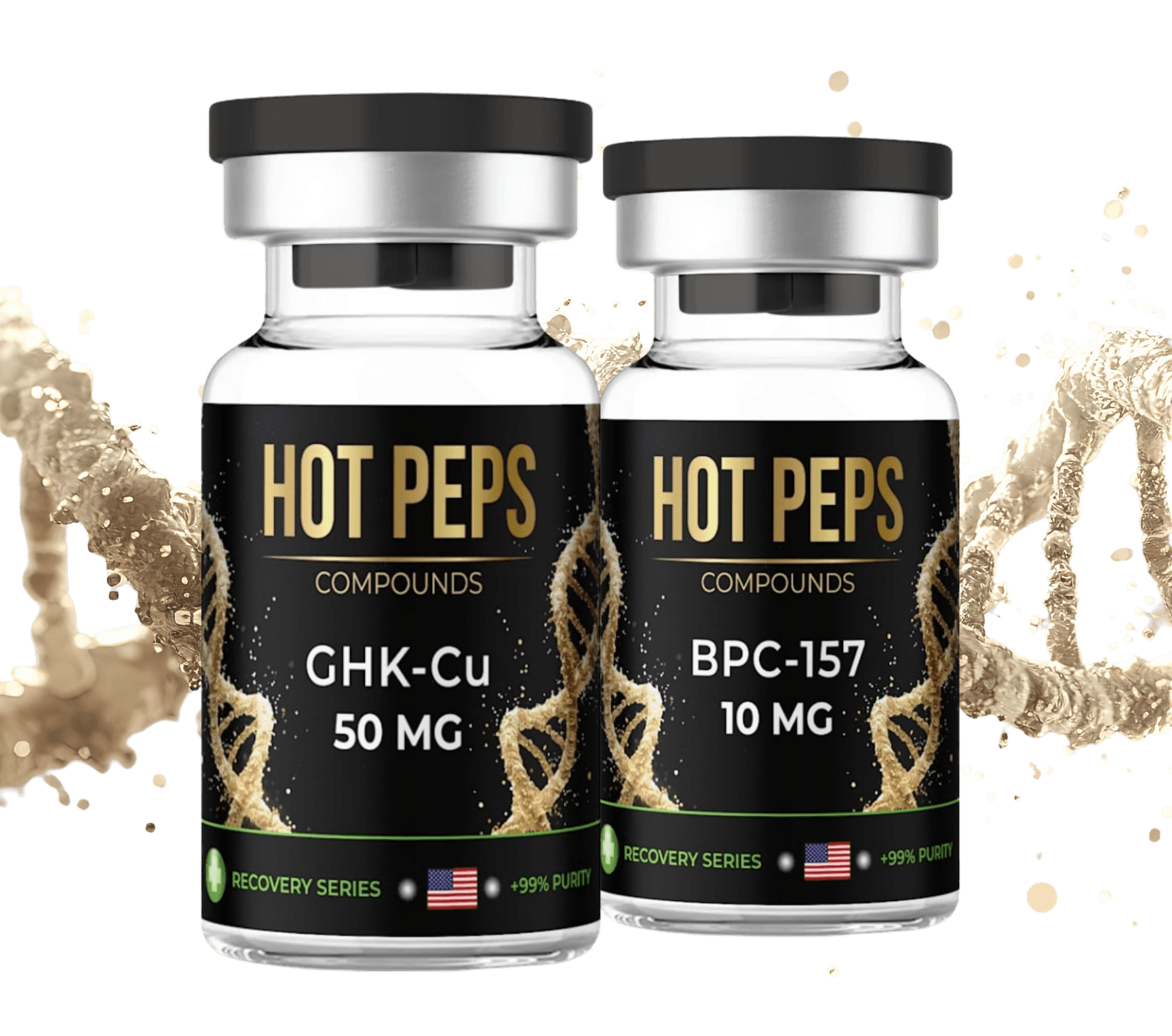
Research supply infrastructure has also evolved to support these expanding investigations. Specialized suppliers such as Hot Peps now provide high-purity research compounds with comprehensive certificates of analysis, supporting the methodological rigor that meaningful peptide research requires. The Recovery Research Kit exemplifies this approach, providing researchers with curated compound selections for specific areas of investigation.
Each of these research directions will ultimately be advanced not by the accumulation of observational reports, but by carefully designed, controlled experimental programs.
Broader Research Context
The specific research directions described above will each follow their own trajectory — but all of them exist within a broader pattern that has played out across scientific disciplines for centuries.
The relationship between informal observation and formal scientific inquiry is not unique to peptide research. Throughout the history of science, anecdotal reports and preliminary observations have served as catalysts for controlled investigation. The key distinction — one that defines the boundary between speculation and knowledge — lies in the subsequent application of rigorous experimental methodology.
In pharmacology and biochemistry, this progression is well established. Initial observations about a compound's behavior in a particular experimental context lead to hypothesis formation, which in turn drives the design of controlled experiments with defined variables, appropriate controls, and predetermined analytical frameworks. Only when results survive this process — and are independently replicated — do they enter the body of accepted scientific knowledge.
The peptide research community is currently navigating this progression across multiple compound categories simultaneously. The volume of community discussion reflects genuine scientific interest, but it is essential that researchers maintain clear distinctions between what has been formally demonstrated in controlled studies and what remains at the level of informal observation.
For researchers seeking to build their understanding on the strongest available foundation, published peer-reviewed literature remains the definitive resource. Community discussions and observational reports can provide useful contextual awareness, but they should be treated as starting points for inquiry rather than conclusions. This disciplined approach to evidence evaluation is what separates productive research from confirmation bias.
Research Disclaimer
Controlled scientific research remains the standard for understanding biological effects. Anecdotal accounts and observational reports do not constitute evidence of therapeutic efficacy.
All compounds referenced in this discussion are sold exclusively for laboratory research purposes. They are not intended for human or veterinary use and are not marketed as having therapeutic applications. Researchers are responsible for conducting their investigations in compliance with all applicable institutional, local, and national regulations governing the use of research materials.
The observational reports and community discussions described in this narrative are presented for contextual and educational purposes only. They do not represent endorsements of any particular experimental approach or conclusions about compound efficacy. Hot Peps encourages all researchers to base their experimental designs on peer-reviewed published literature and to maintain the highest standards of scientific rigor in their investigative work.
Continue Exploring the Science
Compound Research Kits

All information presented in this article references published research literature and is intended for educational purposes only. Research peptides are sold strictly for laboratory research use and are not approved for human consumption or medical treatment.